

Migrants trying to cross the English Channel in a small boat made several emergency calls to UK authorities before they drowned, a new documentary and legal documents claim.
At least 27 people died, with five still missing and two survivors, after the dinghy hit trouble while heading from France to the UK in the early hours of November 24 last year.
An ITV documentary, The Crossing, has sought to piece together details of what happened. At the same time, logs released by France show how French and UK passed the buck over who had responsibility to rescue the migrants.
Lawyers acting for the families of the 32 dead or missing people have compiled evidence showing the victims made calls for help for more than two hours while their dinghy filled with water before they eventually drowned.
The logs, published by the Le Monde newspaper, show the passengers tried to contact both French and English rescue services, but no help was sent. Twelve hours after the first mayday call, the captain of a private boat reported bodies floating in the strait of Calais.
Logs and other evidence from the British coastguard have not been released as they remain subject to a separate investigation from the Marine Accident Investigation Branch (MAIB) that has not yet published its findings.
The development comes after the UK and France signed a new deal to try to tackle the small boats crisis.
Issa Mohammed, a Somali asylum seeker and one of the two survivors, told the programme the group was unable to find where water was getting into the boat because of overcrowding.
Many of the migrants were on their phones calling emergency services, Mr Mohammed said.
“We asked people to empty their drinking water and use the bottles to help dry the boat,” he said.
“Lots of people were on their phones calling the emergency number.
“We told them there are children and families on board and we need help to save our lives.”
At least 27 die in English Channel crossing tragedy — in pictures
-
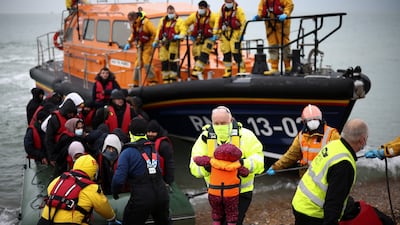
Migrants are brought ashore at Dungeness by RNLI Lifeboat members after crossing the Channel. Reuters -
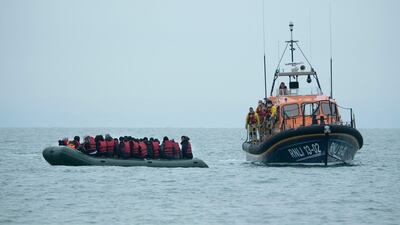
The past three years have seen a significant rise in attempted Channel crossings by migrants, despite the dangers. AFP -
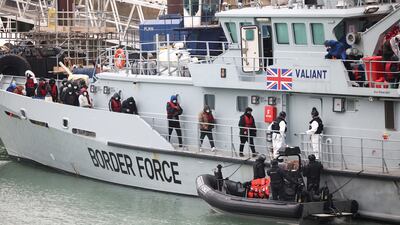
Migrants on board a Border Force rescue boat line up to disembark at Dover harbour after crossing the Channel. Reuters -
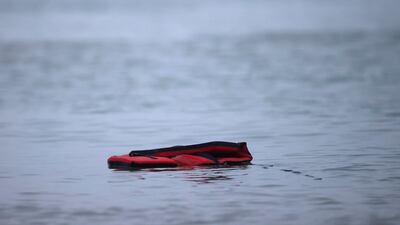
A life jacket is left in the water after a group of more than 40 migrants got on an inflatable dinghy to leave the coast of northern France and cross the Channel. Reuters -
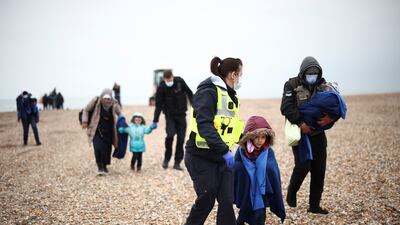
Migrants are escorted by Border Force staff in Dungeness, after being brought ashore by an RNLI lifeboat. Reuters -
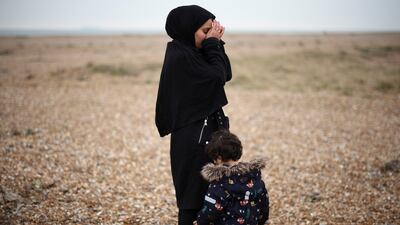
A woman with a child is brought ashore safely. Reuters -
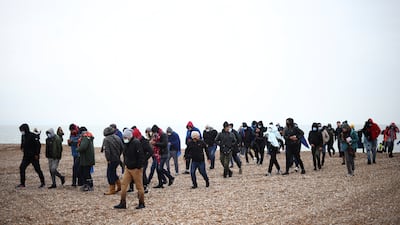
Migrants walk along a British beach after being brought ashore by an RNLI lifeboat. Reuters -

At least 27 migrants bound for Britain died on Wednesday when their boat sank in the English Channel. AP -
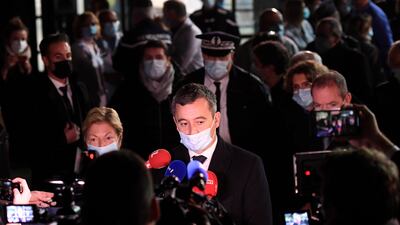
French Interior Minister Gerald Darmanin speaks to the press in Calais, northern France, after the tragedy. AP -
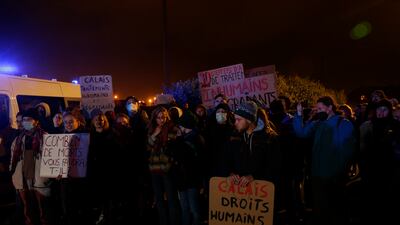
France's interior minister has called it the biggest tragedy involving migrants on the dangerous crossing to date. AP -
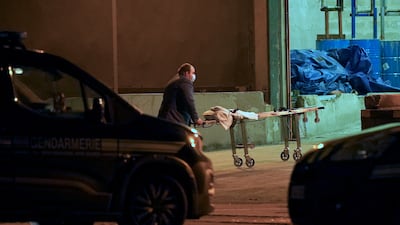
A man wheels a gurney into a warehouse in Calais, where it is believed the bodies of migrants are being transported. PA -
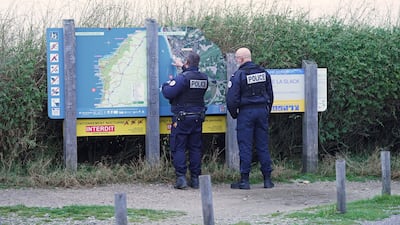
French police look at a map of the coast at Wimereux, in northern France. The stretch of beach is believed to be used by migrants aiming to cross the Channel. PA -
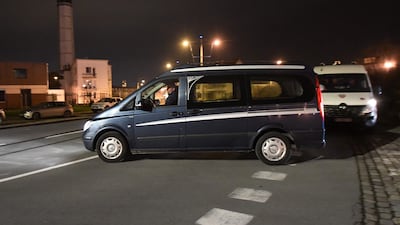
A funeral van leaves the port of Calais. AFP -
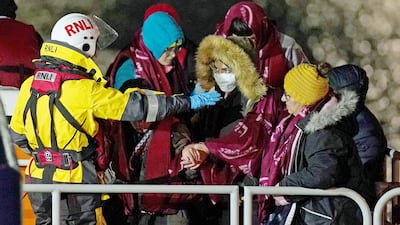
A group of people thought to be migrants are brought to Dover by the RNLI. PA


Mr Mohammed said the water was “very cold”.
“Children were screaming. All I could hear were the screams of people drowning,” he said. “I saw dead bodies floating by my side. That’s when the horror kicked in.”
Candlelit vigil in Calais held for migrants killed crossing the English Channel — video
Screams could be heard in the background as asylum seekers on board the stricken dinghy spoke to the French coastguard but were told to phone 999 because they were thought to be in English waters.
French authorities cut off a call, wrongly told victims a lifeboat was on its way and closed the operation at 4.34am because they received no more calls and assumed British rescuers had arrived.
They had not and nine hours later a French fisherman found the dead floating in the water.
How the nightmare unfolded
Passengers first phoned the French coastguard at 1.51am, call logs uncovered by French lawyers reveal.
The lawyers are suing the authorities for manslaughter.
At 3am the vessel capsized but in the two hours between no effort was made to rescue those on board.
The British coastguard told French authorities that it had made unsuccessful attempts to find the vessel, and in an email at 2.30am said a call had been made but a French dialling tone revealed the boat was in French waters.
In a 14-minute call at 1.51am, a man begs: “Please, please. We need help, if you please. Help us if you please.”
At the end of the call he is told his location has been received and help will be sent.
At 2.06am, a phone conversation between the English and French authorities indicated the position of the boat, which was then in French waters, 0.6 nautical miles from English waters.
At 2.10am, the boat again reported its location by WhatsApp. It was still in French waters.
At 2.33am, a position is again sent by a passenger to the French authorities, who then reply to say to call 999 as they are in English waters.
At 2.45am, a passenger contacted the French authorities and asked for assistance. The coastguard told him that the boat was in English waters and that they should contact 999.
The passengers called the French authorities 15 times between 2.43am and 4.22am.
At 2.46am, a passenger called the French authorities and asked for help, but the call was cut off.
About 3am, the boat overturned.
At 3.31am a passenger called the French authorities, saying they were “in the water”. The authorities replied: “Yes, but you are in English waters, sir”.
At 3:44am, a shipwrecked person contacted the French authorities again and called for help.
The French authorities again said they were in English waters and he should call 999.
He said he could not call them and was told: “They have already been informed. They are on their way.” Eventually the call was cut off.
At 4.08am, the English authorities called the French to tell them they received a distress call from a small boat but had “found nothing at this location”.
The French authorities thanked them for their call and told them their rescue vessel was on another operation.
At 4.09am, a passenger contacted French authorities and asked for help. The rescuer replied that “we have to wait” and that a lifeboat would “arrive in a few minutes”.
It was the last call received and 25 minutes later the French closed the job.
French has held an investigation into the incident with a hearing set to take place at the magistrates’ office in Paris on Friday.
Meanwhile, the British authorities are waiting for the outcome of a Marine Accident Investigation Branch investigation.
The government continues to face criticism over the incident.
“The callousness and apathy of authorities that leave tortured families waiting over a year for answers is scandalous,” said Clare Moseley, founder of Care4Calais.
“We must urgently know what lessons should be learnt from this incident before more people die.”
Matthew Schanck, a maritime expert instructed by lawyers for some of the victims’ families, told ITV: “The fact of the matter is over 30 people were left in the middle of one of the busiest shipping lanes in the world, slowly perishing one by one, and almost nothing happened.”
A Home Office spokesman said: “Our thoughts are with the families of all of those who lost their lives in the tragic incident last November.
“All of the operational teams involved stand ready to respond 365 days a year and work tirelessly to save every person they possibly can.
“We cannot have a repeat of this devastating event and we are working tirelessly with our international partners to disrupt the people-smuggling gangs behind these dangerous crossings who are putting lives at risk with every journey they arrange.”
The Home Office said it would be inappropriate to comment further while the investigation was continuing.

